2027 total solar eclipse at Karnak Temple Complex
Karnak is a separate map location from Luxor Temple and the city-centre Luxor pin. Compare the contact times and centre-line distance at each before deciding where to observe. Temple walls and columns can obstruct a sightline even when the terrain is clear. Entry arrangements and permission for observing require confirmation with the site.
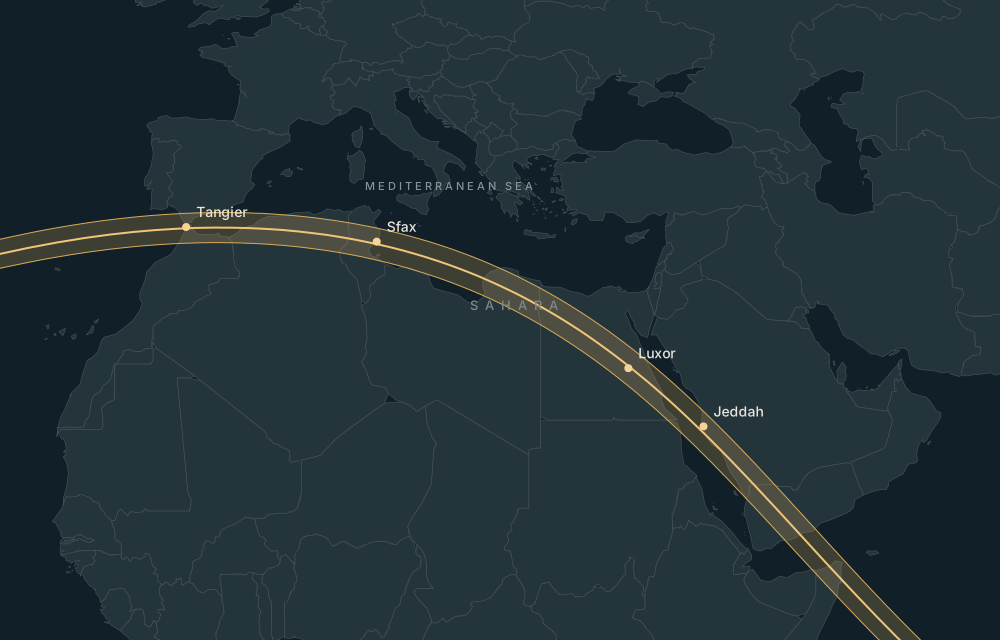
Explore this place on the map ↗ Share my eclipse location ↗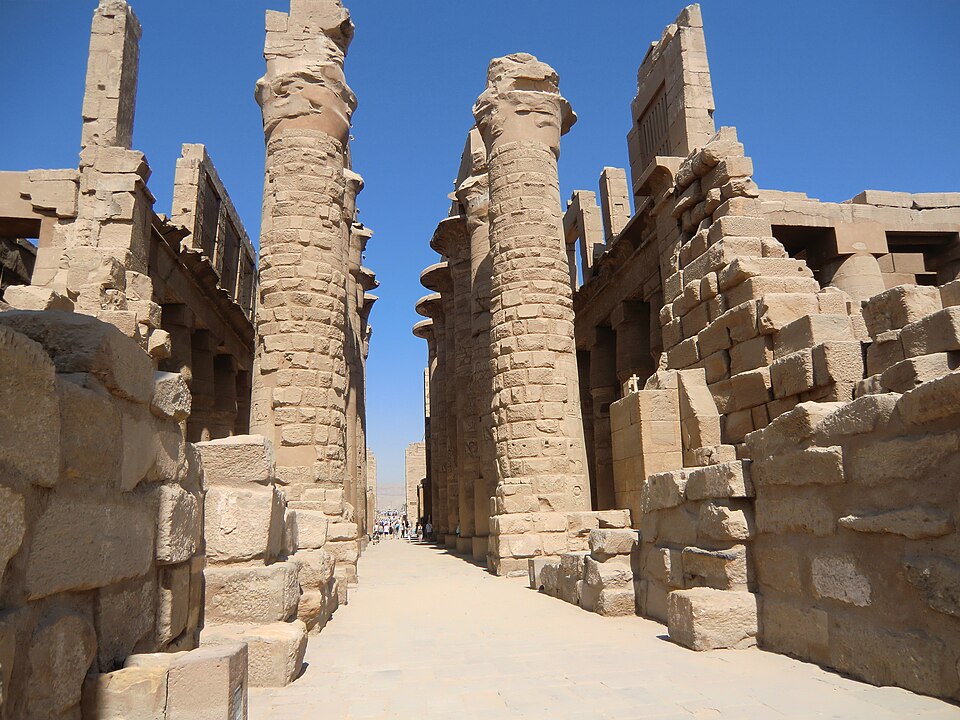
Historical eclipse-season weather
2016–2025 · 26 July – 9 August · 150 daily observations.
11.8% average daily cloud; 6.4% median. 81% of sampled days had mean cloud cover at or below 20%.
Daily mean temperature 33.8°C. Days with at least 1 mm rain: 1.3%.
Regional NASA POWER satellite/reanalysis statistics, not an eclipse-hour forecast. Nearby places may share a grid. Retrieved 2026-09-13.
NASA POWER methodology ↗Airports and accommodation
Use these airport references to plan arrival, then confirm flights and transfers separately. How airport suggestions are ranked · Eclipse travel planning guide.
Practical nearby passenger airports, with preference for the same country; distances are straight-line:
- Luxor International Airport (LXR) · Egypt · 7 km. Major airport.
- Suhaj International Airport (HMB) · Egypt · 115 km. Major airport.
- Marsa Alam International Airport (RMF) · Egypt · 195 km. Major airport.
Verify airline schedules, border access and the actual road route before booking.
Find accommodation for 1–3 August 2027 ↗Availability is checked on the travel provider’s site. No prices or booking availability are claimed here.
Nearby places of interest and alternative locations
Compare these catalogue points for an itinerary or a different observing position. Distances are straight-line and access is unconfirmed.
- Mummification Museum · 6m 21s totality · 3 km away
- Luxor · 6m 21s totality · 3 km away
- Luxor Temple · 6m 21s totality · 3 km away
- Valley of the Kings · 6m 21s totality · 6 km away
- Dendera · 6m 14s totality · 47 km away
- Abydos · 6m 21s totality · 90 km away
Sources & method: eclipse calculations, weather and catalogue limitations